
Emergency response to the crisis in Mecula
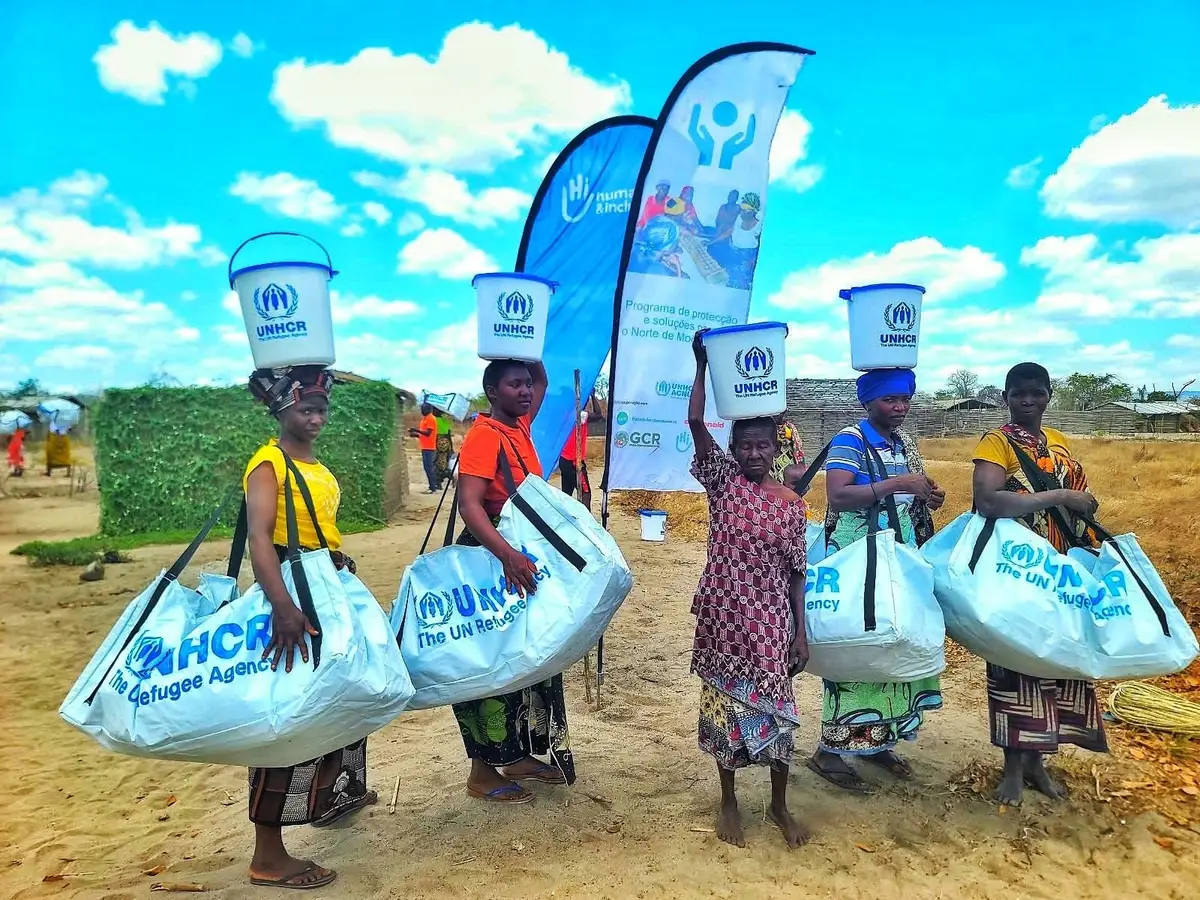
After the armed attacks of late April and early May 2025 in Mecula, GCR, with UNFPA and the support of the European Union, delivered 500 dignity kits to displaced women and girls and set up two psychosocial support tents.
After the armed attacks of late April and early May 2025, hundreds of families from Mbamba, in Mecula, Niassa province, were forced to leave their homes. Among the displaced, more than 500 women and adolescent girls faced high protection risks, such as family separation and gender-based violence (GBV), which were greater for persons with disabilities.
Dignity in times of crisis
It was in this context that Girl Child Rights (GCR), in partnership with UNFPA and with the support of the European Union, organised the response. Within a few days, GCR coordinated the delivery of 500 dignity kits to women and girls aged between 11 and 30. Priority was given to pregnant and breastfeeding women, persons with disabilities and unaccompanied adolescents.
A space for relief, information and protection
The distribution point was a temporary accommodation centre for more than 2,000 displaced people. At the same site, GCR set up two tents dedicated to:
- psychosocial support;
- awareness sessions on sexual and reproductive health;
- safe space activities.
The first kit was handed over symbolically by the District Director of Health, Women and Social Action.
Challenges on site
The site lacks latrines, mosquito nets and protection services, which increases the risk of disease outbreaks and incidents of violence.
GCR is strengthening case referral, psychosocial support and community surveillance. The organisation stresses, however, that more technical and financial support is urgently needed to ensure the continuity and scale-up of the response.
About the response
The emergency response in Mecula was carried out by GCR in partnership with UNFPA and with the support of the European Union, as part of GCR’s work in Niassa on GBV prevention and response in displacement settings.
For protection reasons, we do not publish the names of the people we support or images that could identify them.